Remanufacturing
Remanufacturing of a MERGER type NORPA 710-4 speed reducer for the steel industry
Discover the remanufacturing of a speed reducer dedicated to lifting at an ARCELOR site
Remanufacture an industrial speed reducer
In a sector as demanding as steelmaking , every component plays a crucial role. It was in this context that MERGER was approached by a major player in the industry to handle the complete remanufacturing of a NORPA 710-4 type speed reducer . This strategic piece of equipment, used for critical lifting operations ( powering the largest casting bridge in Europe at the time of its commissioning), required a customized approach, combining technical expertise, meticulous documentation, and full compliance with quality standards.
It is not uncommon to find a MERGER industrial speed reducer in rolling mills , lifting winches or belt conveyors .
For 75 years, we have been designing speed reducers capable of withstanding high torque on the output shaft, enabling the efficient lifting of heavy loads for these historical markets.
A unique reducer for extreme loads
This gearbox is designed to drive two lifting drums in a steel production environment. It features rare technical specifications:
- Driven by two 690V three-phase asynchronous motors,
- High reduction ratio of 210,
- Output torque reaching 800 Nm.
With such a configuration, it is a key element in heavy handling operations , where robustness and reliability are non-negotiable.
Initial analysis and diagnosis: key to successful remanufacturing
Initial inspection
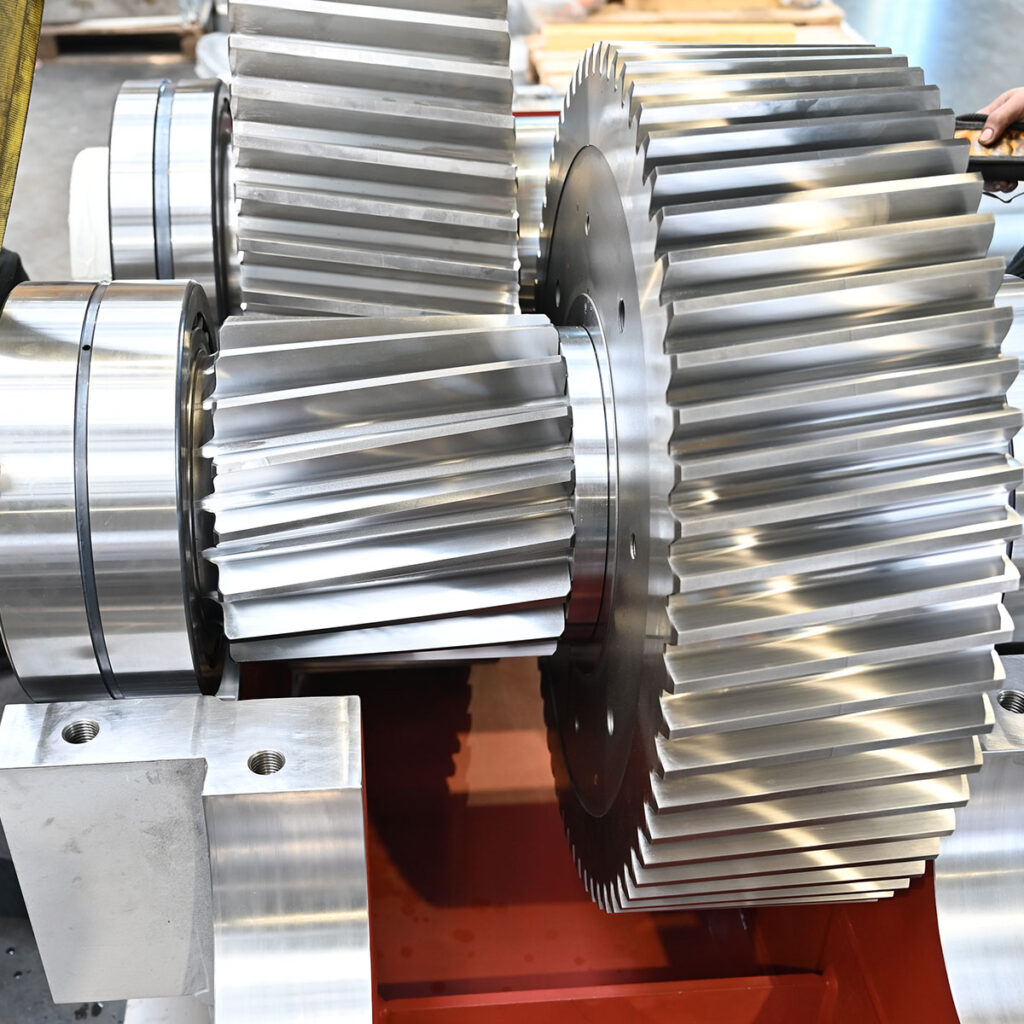
Disassembling the gearbox allows for the examination of each component: casing, gears, bearings, and seals. This step allows for the detection of any signs of wear, corrosion, or mechanical fatigue that could compromise the system's performance.
Non-destructive testing
Analyses are carried out using techniques mastered by MERGER such as dye penetrant testing , ultrasound , and dimensional control . These methods make it possible to identify any cracks, microcracks or internal defects invisible to the naked eye.
Statement of clearances and tolerances
The alignment of the gears and shaft bearings is precisely checked to ensure that clearances and tolerances are within specifications. Indeed, any deviation can lead to loss of efficiency, premature wear, or abnormal vibrations.
Manufacturing supervised by a demanding quality plan
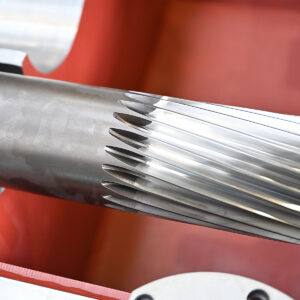
At MERGER, quality is achieved through traceability. For this project, a LOFC (List of Manufacturing and Control Operations) quality plan was implemented to ensure rigorous monitoring of each component — from gears to shafts, including welded mechanical parts.
The gearbox housing , weighing 12,5 tonnes and equipped with mounting brackets for optimized anchoring, underwent specific treatments and controls:
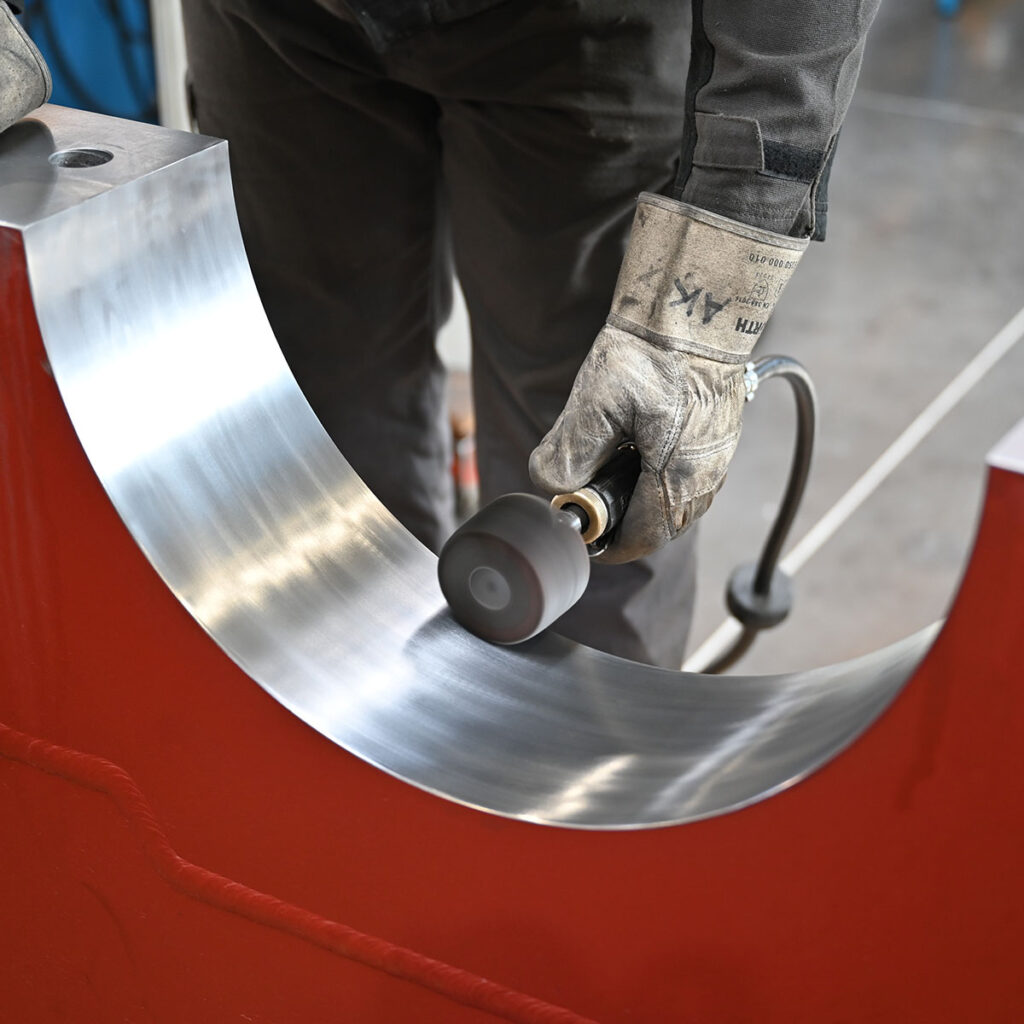
- Reworking of bores for perfect integration of the bearings,
- Checking and aligning all gears,
- Checking the gearing worn in Prussian blue,
- Internal surface treatment to strengthen sustainability.
A quality file delivered, meeting the requirements
In accordance with industry standards, MERGER provided a complete quality dossier including:
Manufacturing documents:
- Material certificates (mobile and sheet metal),
- Welding notebook,
- PV of penetrant testing, shot blasting, ultrasonic testing, KCV resilience at 0°C,
- Annealing curve, heat treatment indicators,
- Dimensional, hardness and cementation PV,
- Installation, maintenance, repair and storage instructions.
Compliance documents:
- Minutes of acceptance,
- Construction certificate,
- Certificate of conformity.
Control to maximize reducer reliability
To guarantee the performance and safety of the gearbox, MERGER has implemented a series of rigorous controls:
- Visual and penetrant inspection to detect possible cracks.
- Ultrasonic testing to ensure the integrity of internal components.
- Thermal testing and dimensional cementation to validate performance under stress.
- Shot blasting to strengthen mechanical resistance.
A complete solution delivered by MERGER
The gearbox is not supplied bare: MERGER has designed an integrated system with couplings and emergency brake . Measuring 1,5 m high by 3 m long and with a width varying from 720 to 970 cm, it is designed to withstand extreme conditions with a lifting height of 37 m and an auxiliary lifting capacity of 80 mN.
This project is a prime example of MERGER 's expertise in remanufacturing strategic equipment for the steel industry . Through its rigorous approach and technical expertise, MERGER guarantees its client, a major player in its sector, a reliable and high-performance solution that meets the most stringent industrial requirements.
Fretting: a precision operation
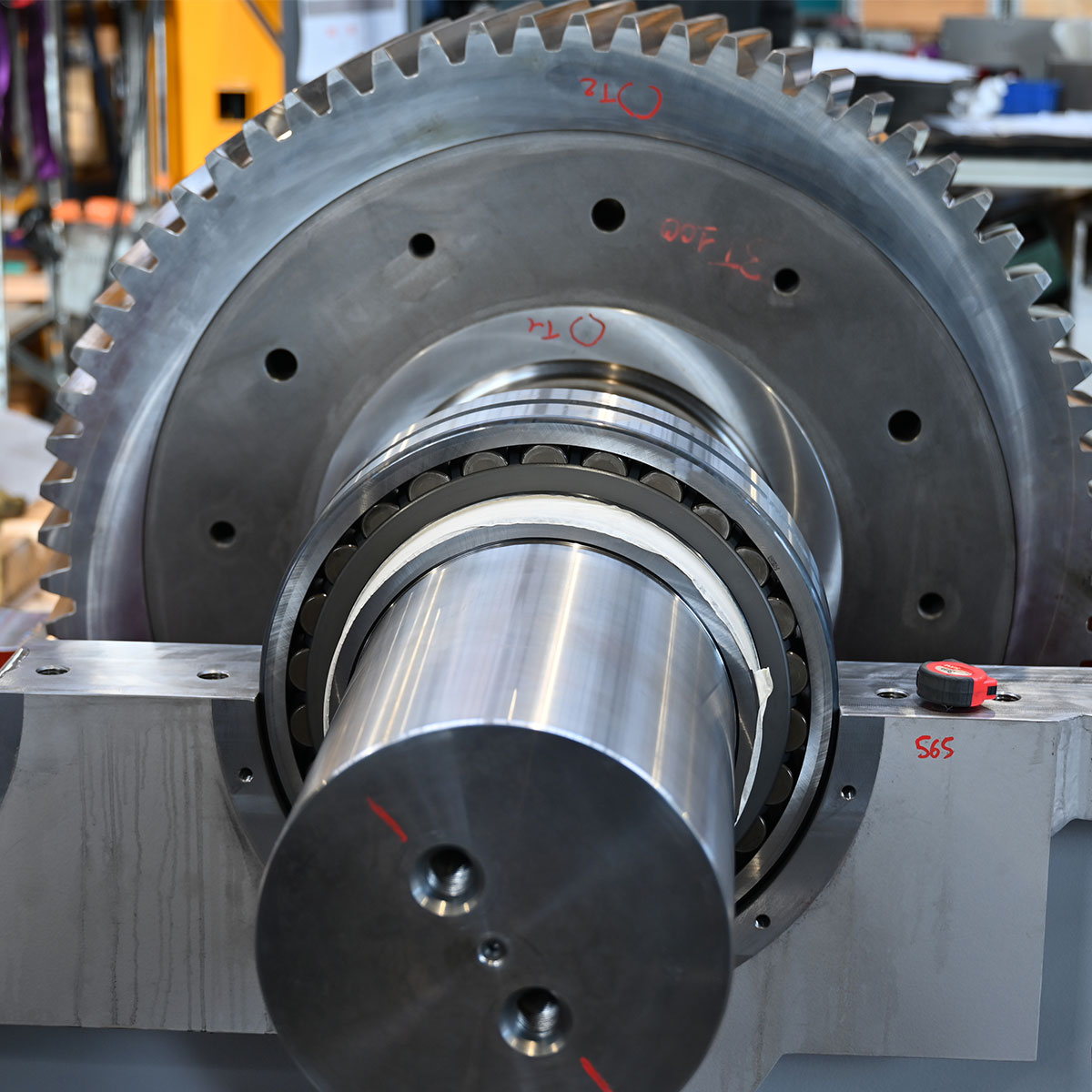
Among the specific operations carried out, MERGER performed a shrink-fitting of the shaft to precisely integrate the gear system. This operation consists of:
- Cool the tree, often with liquid nitrogen or by cryogenic process,
- Le contract slightly, reducing its diameter,
- The insert into the bore of the gear,
- Once at room temperature, the shaft expands and mechanically locks extremely reliably.
MERGER, the benchmark in remanufacturing for heavy industry
This project perfectly illustrates MERGER's expertise in the remanufacturing of critical equipment for the steel industry . Thanks to a rigorous approach, complete mastery of thermal and mechanical processes, and impeccable document management, MERGER provides its clients with reliable, durable solutions that meet the most stringent requirements of the industrial sector.
Need a remanufacturing service? Contact our experts for personalized support.

History and environment of the NORPA speed reducer:
At the heart of the largest casting bridge in Europe
EIFFEL – Lifting – translation – steering reducers of the 505-ton cast iron bridge for SOLLAC / 13 – FOS sur MER
MERGER, a French manufacturer of speed reducers, had delivered 17 reducers for the motorization of the largest casting bridge in Europe.
Installed on the SOLLAC maritime site in Fos sur Mer , this gigantic structure of more than 1000 tonnes manufactured by the EIFFEL company was put into industrial production in July 2002.
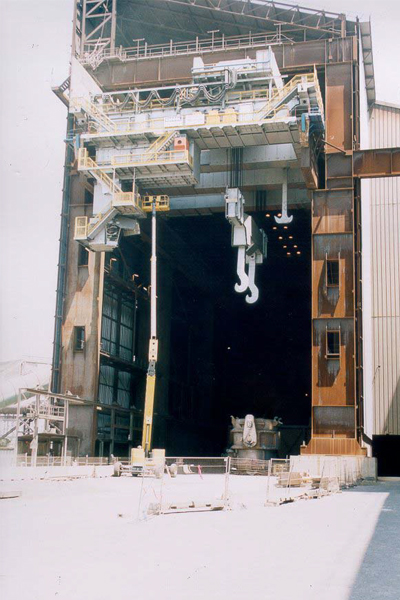
View of the bridge on its rails at the entrance to the casting hall. The casting ladle is on the ground.
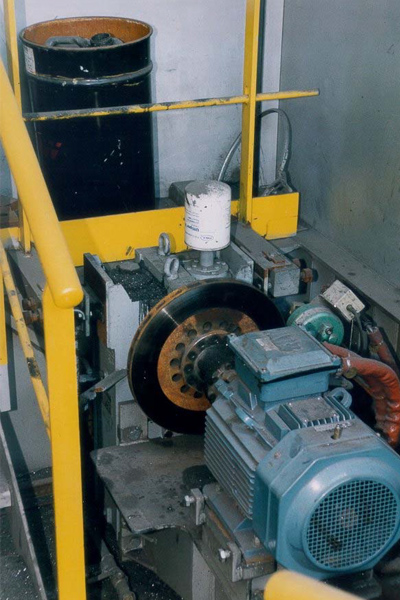
The steering movements are powered by two vertically mounted UNIPA 2-180 gearboxes. The main steering of the bridge is powered by four UNIPA 4-4 gearboxes.
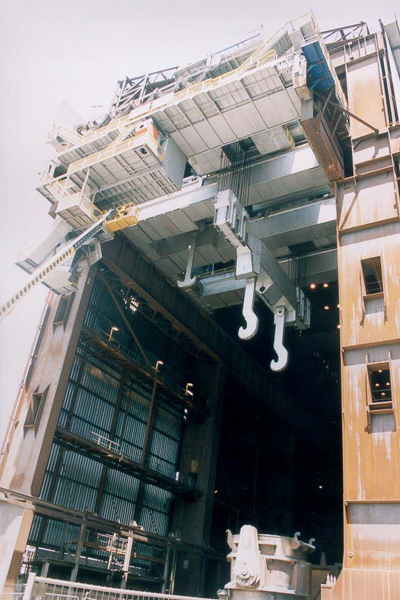
View below the bridge. We can see the two main lifting hooks and the auxiliary lifting hook.
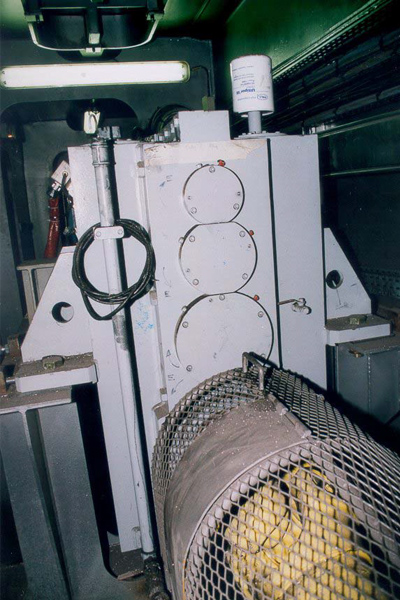
The trolley's translation on the beams has been cleverly placed in a vertical position in the boxes forming the very structure of the bridge. These are 6 UNIPA 315-3 type reducers.
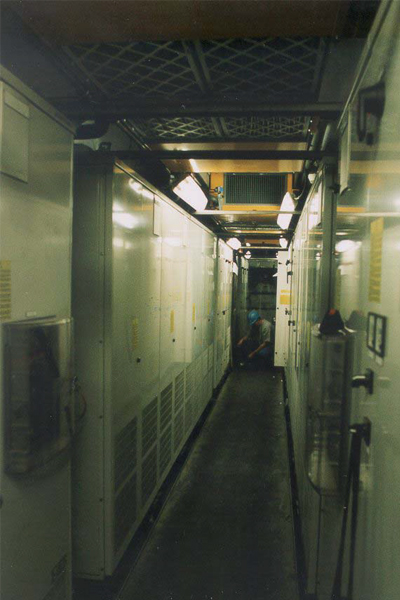
View of the air-conditioned cabin containing all the electrical and automation systems.
Preventive maintenance of these gearboxes is triggered by vibration sensors placed at sensitive points. Periodic ultrasonic shaft inspections are performed without draining the gearboxes. An oil sampling port is also located on each gearbox.
An overhead crane designed to lift a mass of 505 tonnes in the main lift
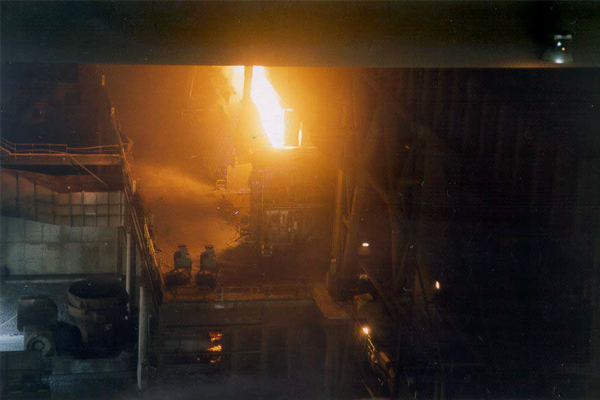
A true production hub for the steel industry, the structure operates in difficult conditions, plagued by flames and dust, 24 hours a day , 365 days a year.
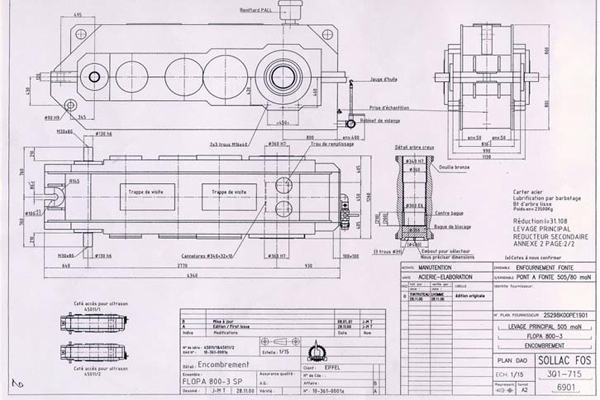
Each of the two main reducers alone weighs 23,5 tonnes and measures 4,50 m long and 1,6 m high.

View of the three case-hardened, hardened and ground steel gear trains of the main lifting reducer type FLOPA 800-3.
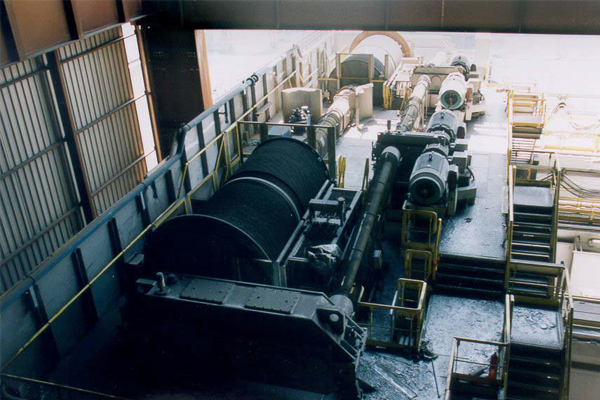
The main lifting system is made up of a closed loop according to the know-how of the EIFFEL company: 2 primary reducers type NORPA 400-3 are motorized by 4 ABB brand motors with a power of 450 kW each, i.e. 1800 kW in total.
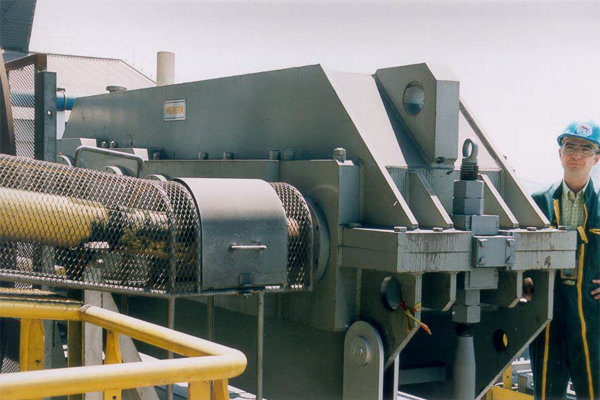
It is mounted floating on the splined shaft of the winch. A reaction clip holds the reducer in position.
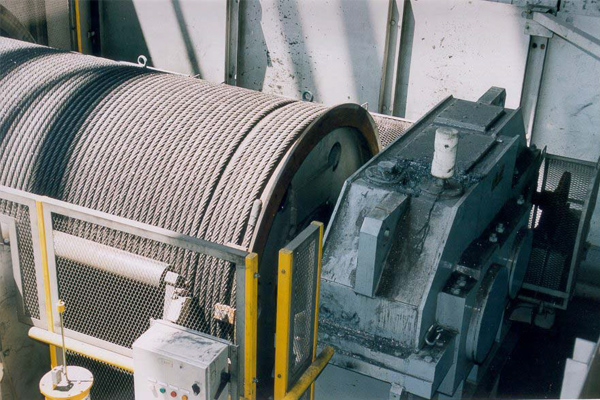
The auxiliary lifting is also powered by an imposing size NORPA 710-4 type reducer (subject of this article) , weighing 11 tonnes.
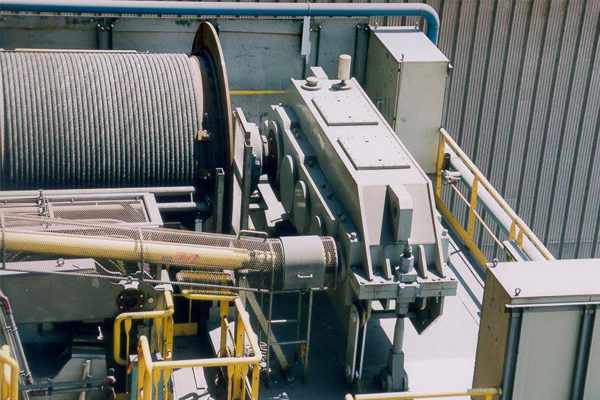
Each primary reducer sends the multiplied torque to a main lifting reducer type FLOPA 800-3 developing a nominal torque of 365 Nm on the winch. In the event of degraded operation, this torque can reach the value of 600 Nm
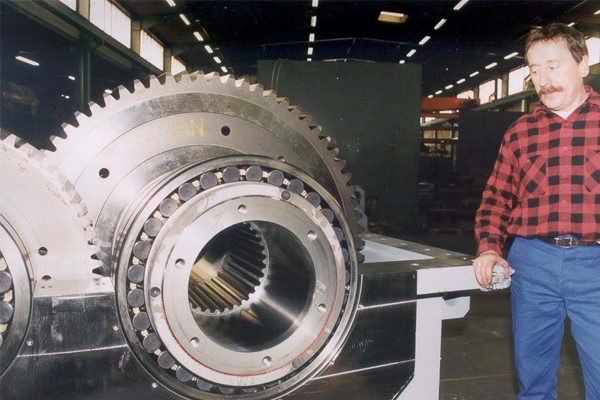
View of the factory assembly of a main lifting reducer, the wheels are shrunk onto their shafts.
The casting overhead crane transports ladles of molten iron to the oxygen furnace (BOF), or molten steel from the BOF or electric arc furnace to the continuous casting machine. It can also be used for casting and smelting operations. Safety and reliability are paramount, as the crane is used to transport molten steel.