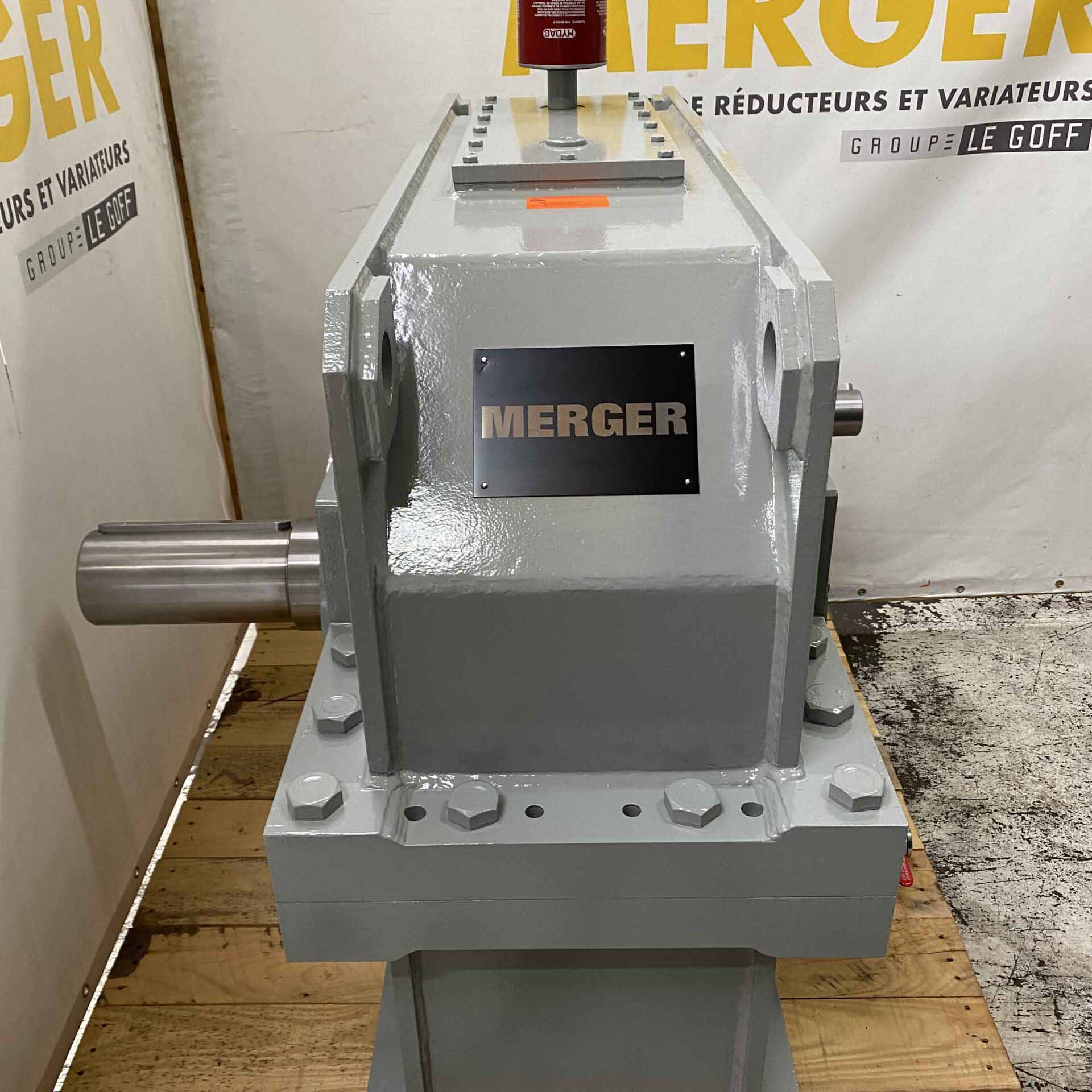
Remanufacturing
Remanufacturing of the gearbox for a ball mill (mining industry)
Replacing a reducer without modifying the existing installation
Our client: a global lime producer
Our client is part of a international group recognized as one of the world leaders in the production of lime, dolomite and mineral solutionsserving numerous industrial sectors. Founded at the end of the 19th centuryThe group is present in more than 25 countries and brings together more than 6 600 employees representing more 70 nationalitiesIt relies on a network of more than 135 websites and is expanding its business activities in more than 80 countries, Europe, North America, Latin America and in the region Asia Pacific.
The customer concerned by this order is one of the sites in France who produce and market the lime within the company. Between maintenance, reparation ou remanufacturingFrench websites regularly use MERGER, especially for the robustness of devices, the product durability, And the confidence born from a long-standing collaboration between the two companies.
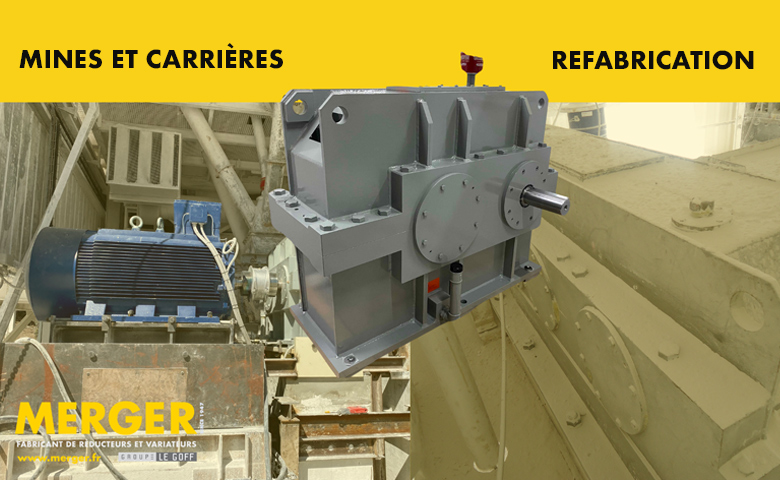
The speed reducer of a ball mill, a crucial component for crushing
Speed reducer for ball mills: an industrial and economic challenge
This is 2020 that the client decides to use MERGER to replace the reducer of ball mill in place for more than 30 yearsThe issue at stake obviously remains of a certain order. economic.
The ball mill: a benchmark solution for the fine grinding of minerals
Le ball mill is a reference piece of equipment for the fine grinding of mineralsThrough the action of steel balls set in motion in a rotating drumit reduces the size of the particles down to the final particle size targeted, in dry route ou wet, while allowing a excellent product control.
The key role of the speed reducer in grinding performance
The speed reducer is a central component in the operation of a ball mill . It ensures the transmission of torque and the adaptation of the rotational speed between the motor and the drum, while absorbing high and continuous mechanical stresses . Its design, robustness, and precision directly determine the reliability of the installation , the quality of the grinding , and the availability of the equipment in demanding industrial environments such as mines and quarries.
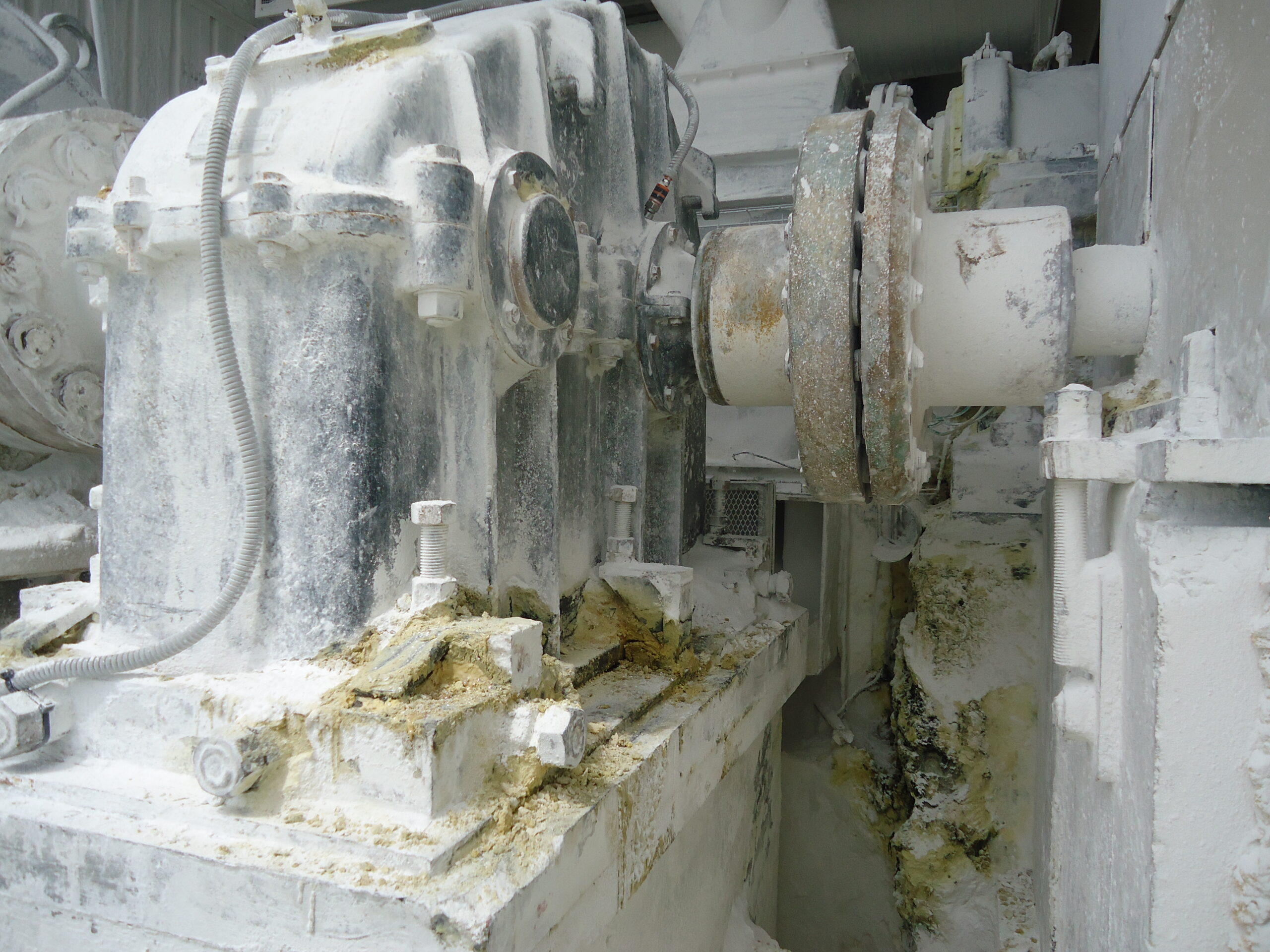
The client's constraints: a single crusher and the need to ensure continuous production.
Since the site has only one crusher , it is essential to guarantee its smooth and uninterrupted operation to ensure continuous production. Crushing occurs immediately after limestone extraction and is the step preceding calcination. A crusher shutdown leads to a disruption in deliveries within hours, as the stock of material at the crusher's output is insufficient to maintain operations in the short term.
Another significant constraint concerns the age of the gearbox . Over forty years old and frequently repaired, it exhibits cracks in the casing and heavily worn moving parts . Given that this is the only crusher on the site, a mid-year shutdown of the plant is not an option. Without a production stoppage, it is therefore impossible for the client to send the gearbox to the MERGER workshops for inspection or repair.
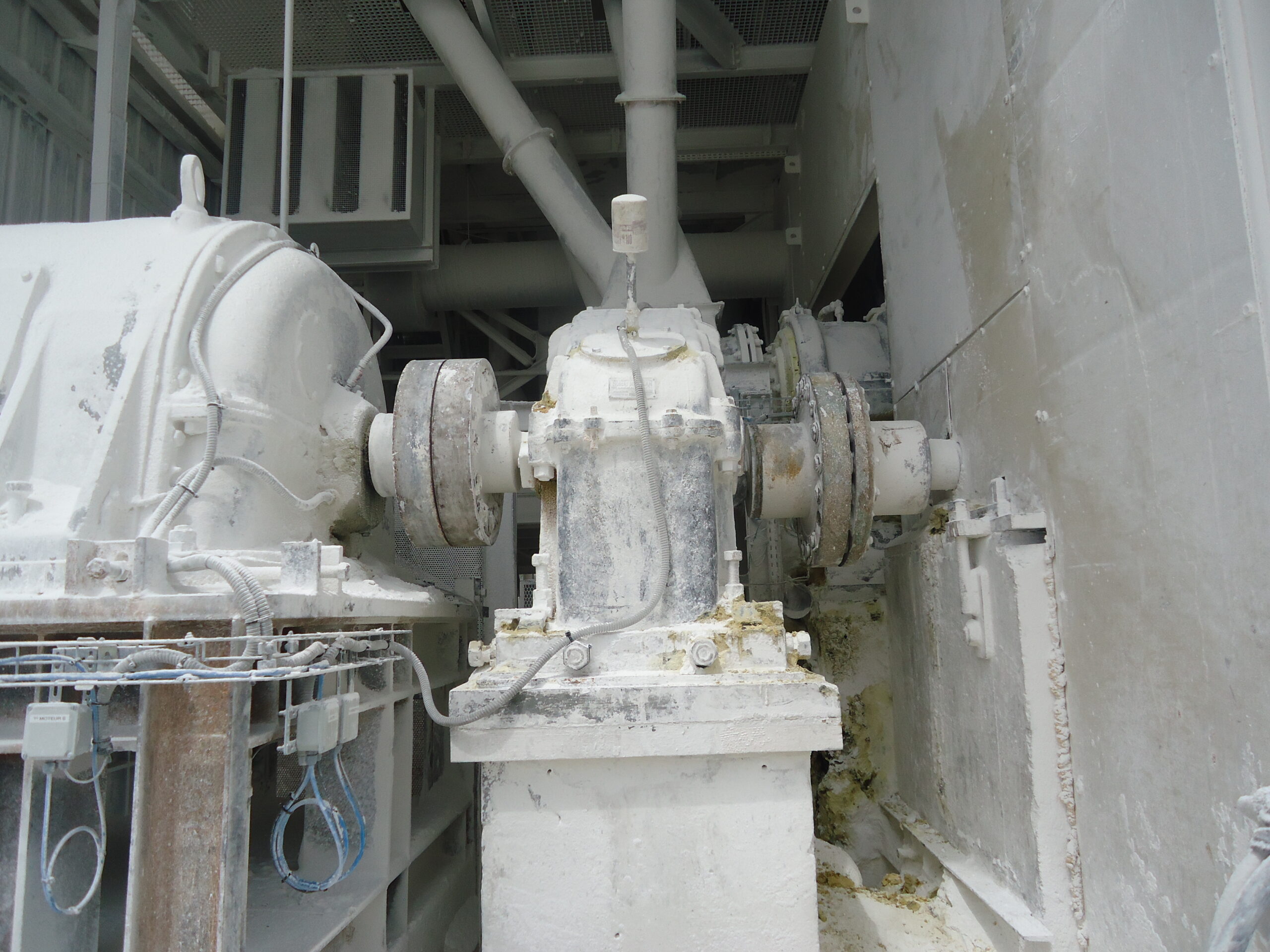
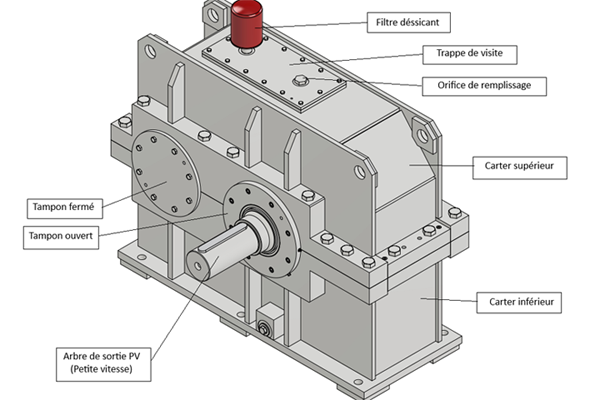
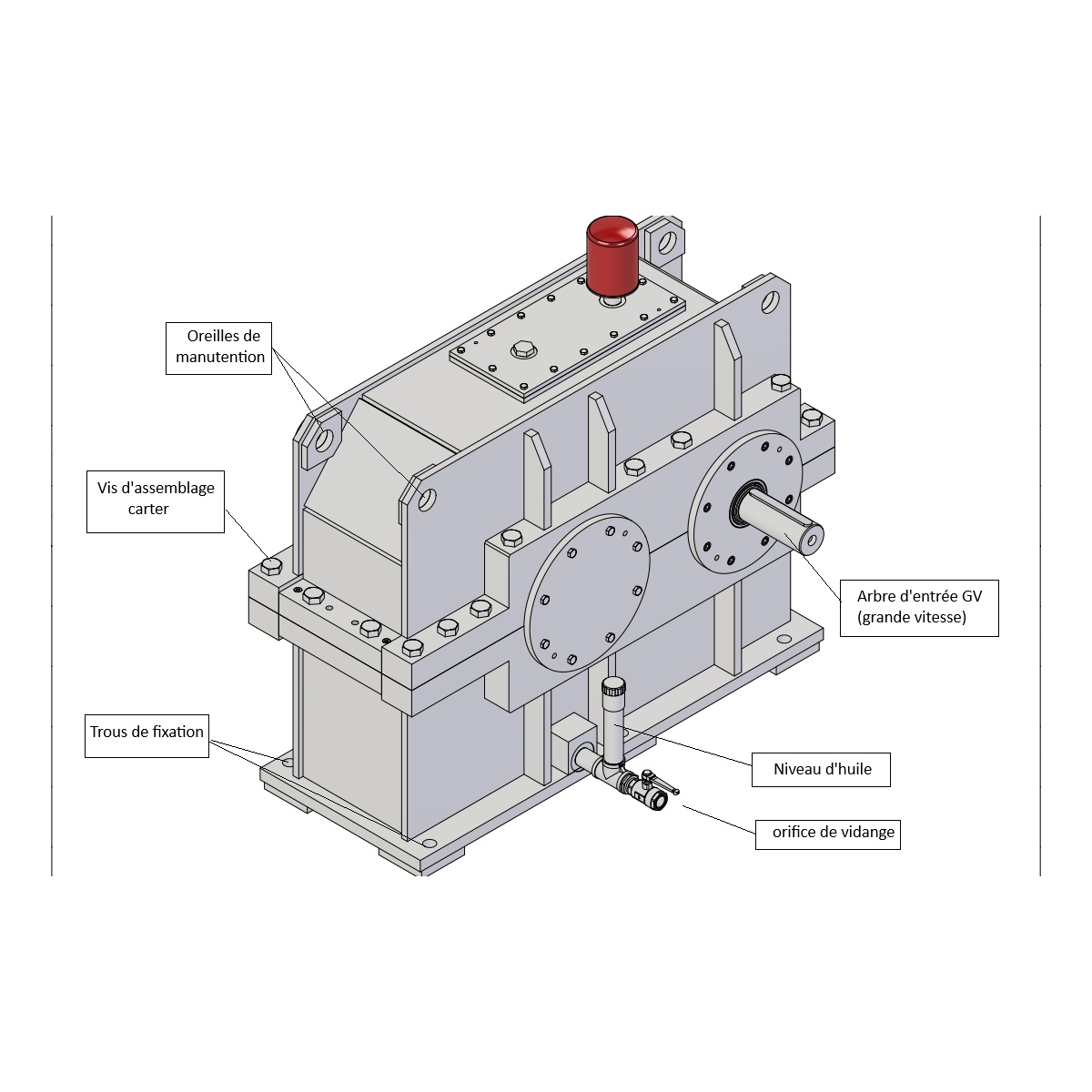
On-site expertise, manufacturing of a new gearbox from a 3D plan
To provide an appropriate response to the situation, an on - site assessment was initially decided upon. Two engineers went to the site to take various measurements of the gearbox housing and to record the integration environment , so that the proposed plan would be perfectly suited.
With the gearbox in operation , measurements of the moving parts are taken using spare parts already available from the customer. These parts, old and from previous repairs, allow MERGER to move forward with the design of the future gearbox.
Following this intervention, MERGER's internal design office produces a plan which is then sent to the client. After approval, the order is placed.
Remanufacturing an industrial gearbox: from taking measurements to bench testing
The steps then unfold according to a clear logic. One taking measurements is carried out on site in order to observe the reducer in its environment, to record the dimensions of the outer casing and mobileand document the case with photographs and a remanufacturing plan is then validated by the client, taking into account the industrial environment. The manufacturing The work on the various components and the crankcase is carried out over several weeks, before theassembly in the workshop by an assembler.
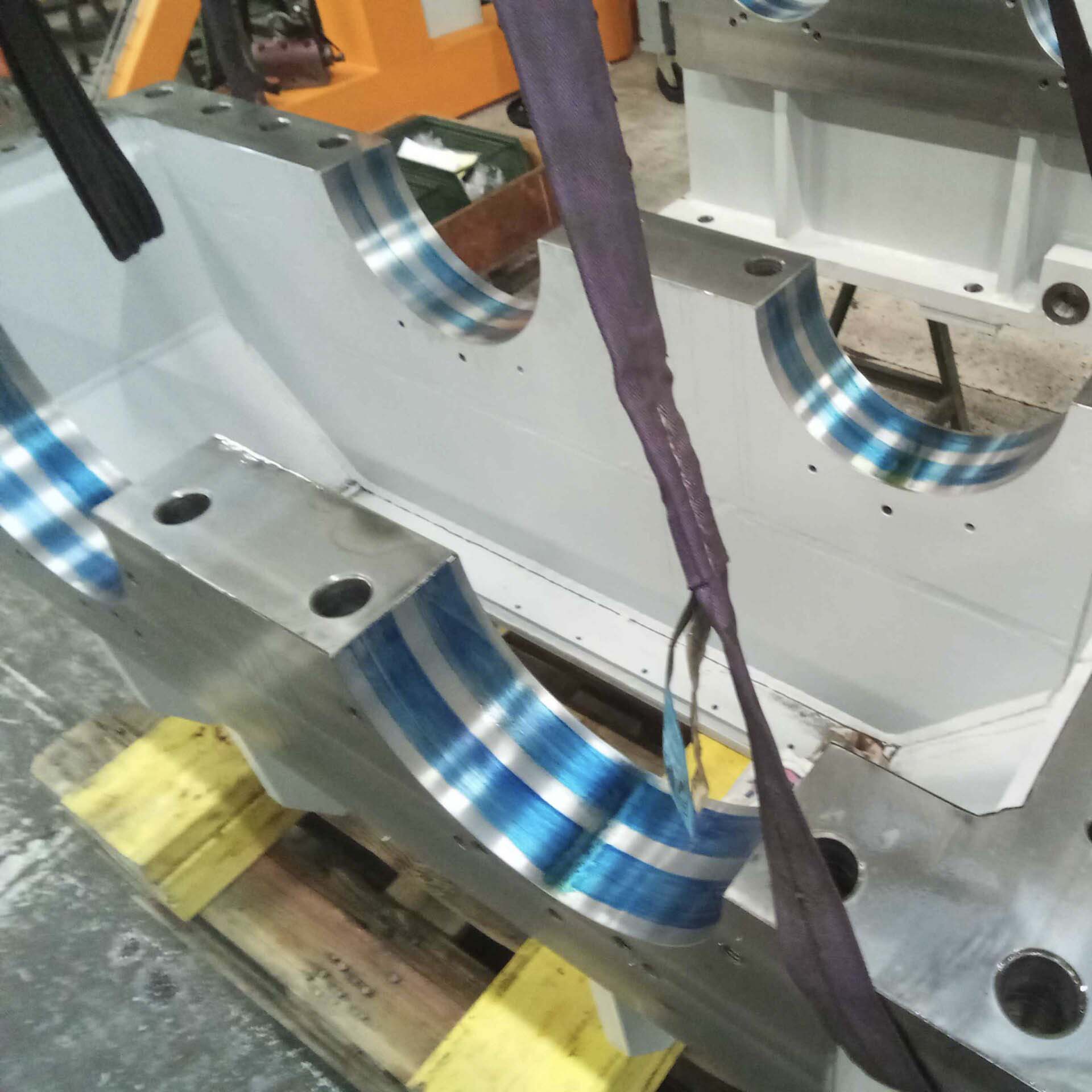
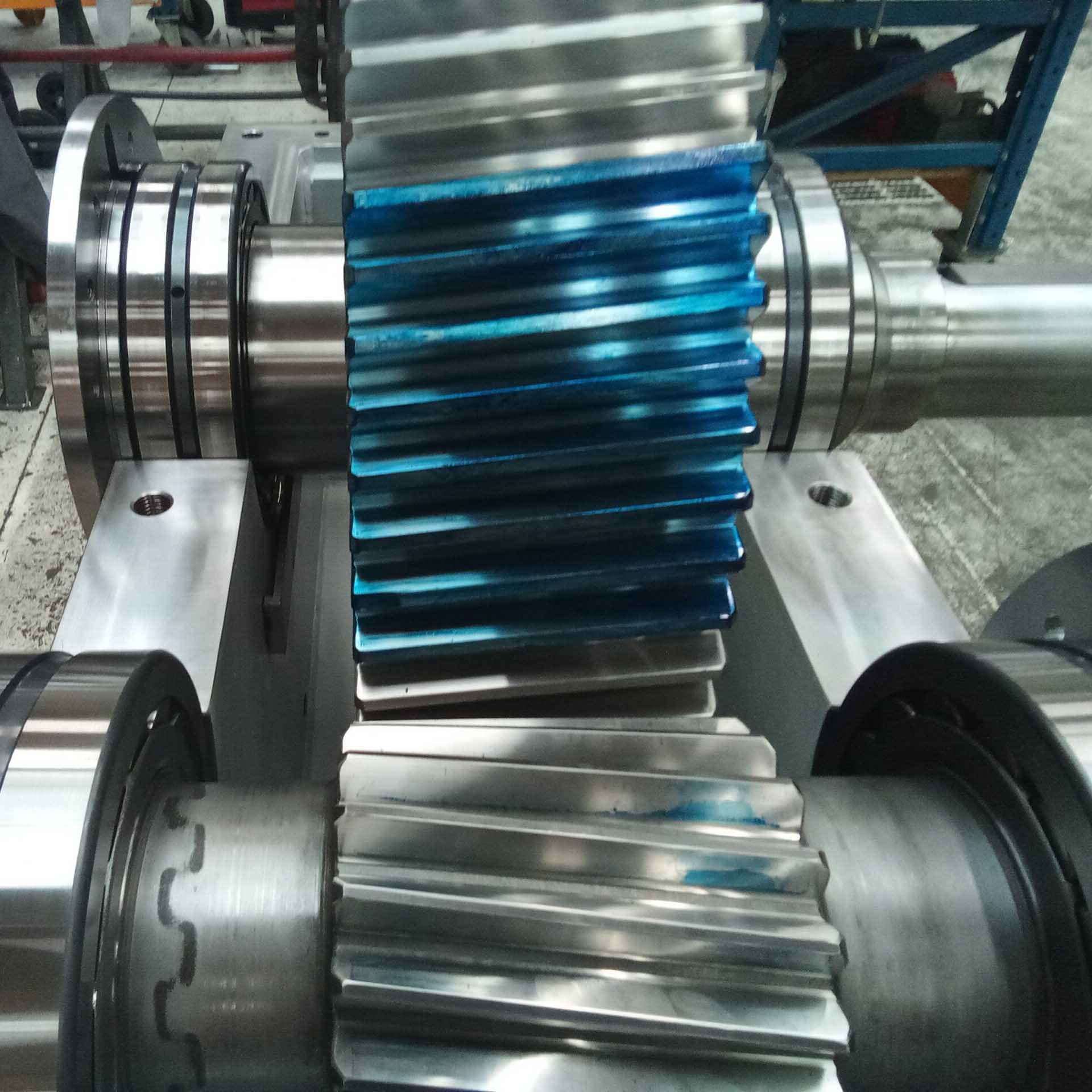
To ensure optimal gear operation and prevent tooth breakage or abnormal wear , assembly is carried out according to a methodology specific to the manufacturer MERGER . The housing and shafts meet strict requirements for rigidity and manufacturing precision . To check the quality of the gear mesh , one method involves visualizing the contact area between the teeth using a marking color . This operation, called blue or red marking (visual inspection of tooth contact), allows verification of the relative positioning of the gears . MERGER also performs other checks during assembly, notably by checking the backlash between the teeth.
Once the device is assembled, checked, and the casing is closed, it is sent to control departmentThe reducer is fixed to the test bench MERGERHe tried without charge à 1 500 rev / min, then validated and packaged before shipment. The customer then ensures the assembly in place of the old reducer, without modification of the existing installation.
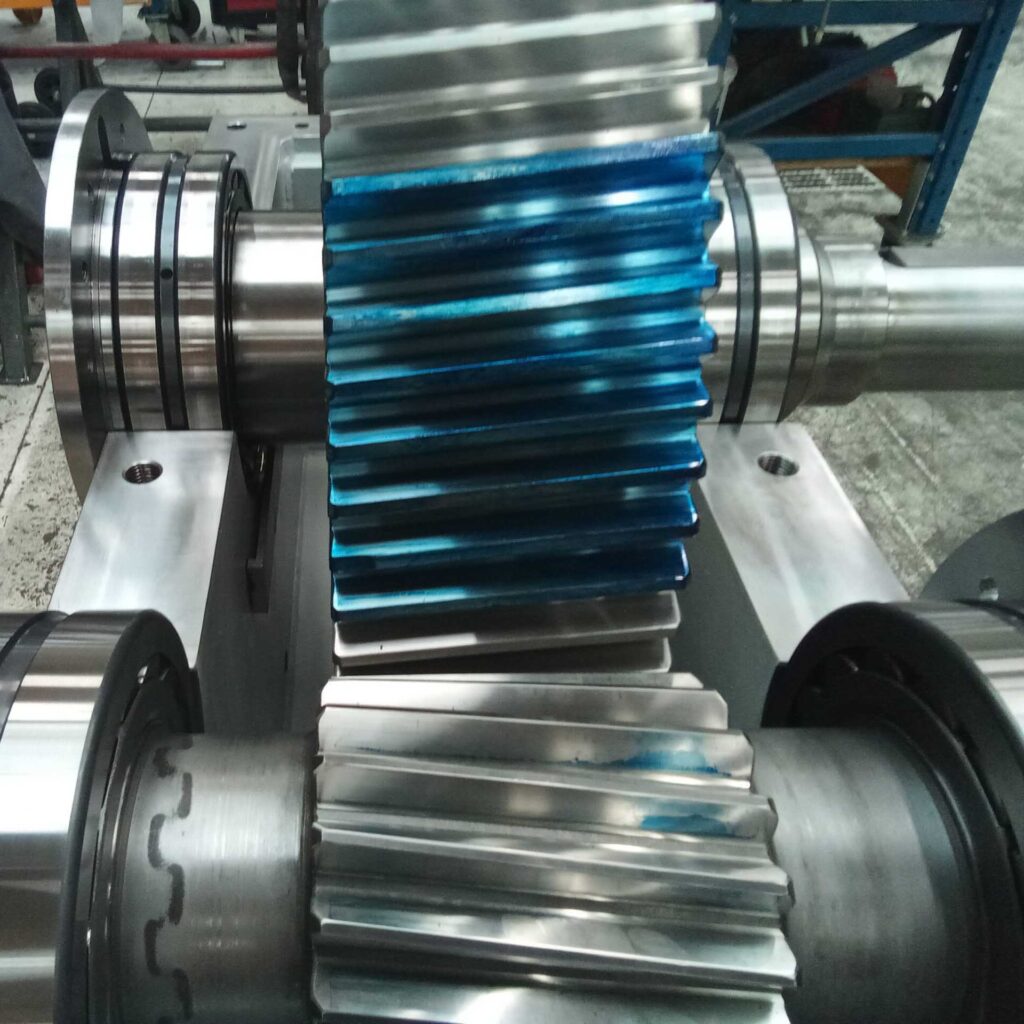
Remanufacturing a gearbox that's over 30 years old: a tailor-made solution to secure production
This remanufacturing allows the customer to secure a essential installation to its activity, in a context where a production shutdown is not an option. Thanks to a on-site expertise, upon validation of a adapted plan to the real environment, then to a rigorous manufacturing followed bytrials, MERGER provides a solution that complies with industrial constraints, while ensuring the continuity of operation of the crusher and the stability of deliveries.