A site designed to reduce our environmental footprint and meet the National Low Carbon Strategy (SNBC)
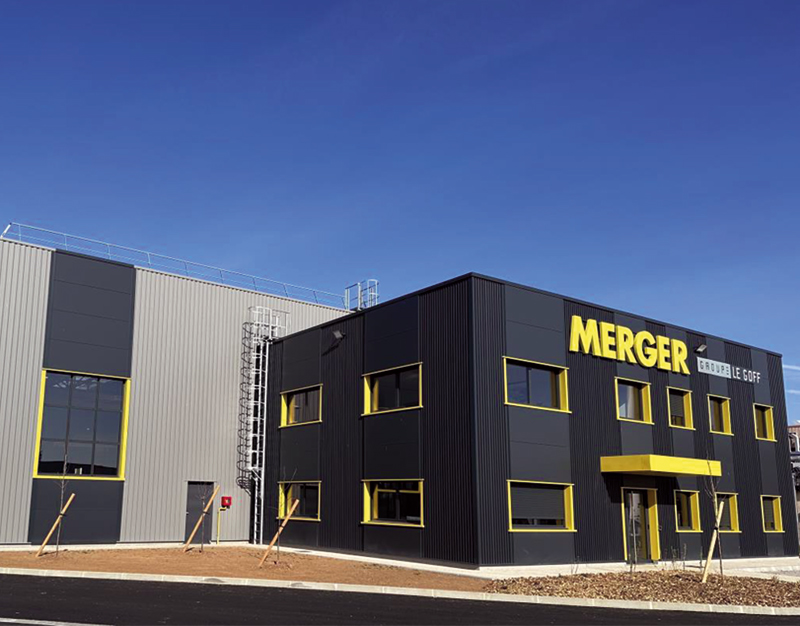
Two years ago, we inaugurated a new building designed from the outset to meet the criteria and requirements of SNCB ( National Low Carbon Strategy ) setting the course for carbon neutrality by 2050.
All direct and indirect environmental aspects, such as greenhouse gas emissions , energy consumption , air and water pollution , waste reduction and treatment , recycling and reuse , have been taken into account.
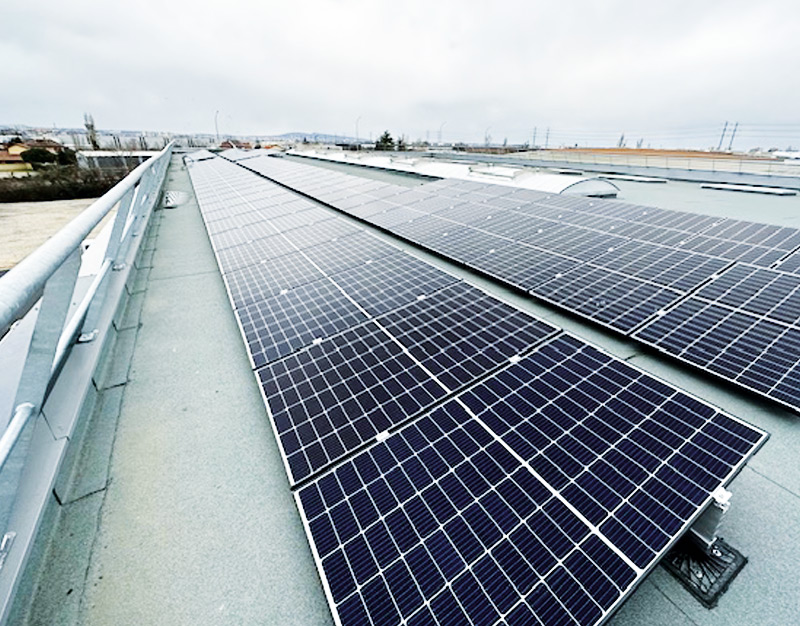
We equipped it with solar panels to produce some of our energy independently . Thanks to enhanced insulation and a centralized temperature control system, we significantly reduce our energy consumption in winter and ensure greater comfort in summer.
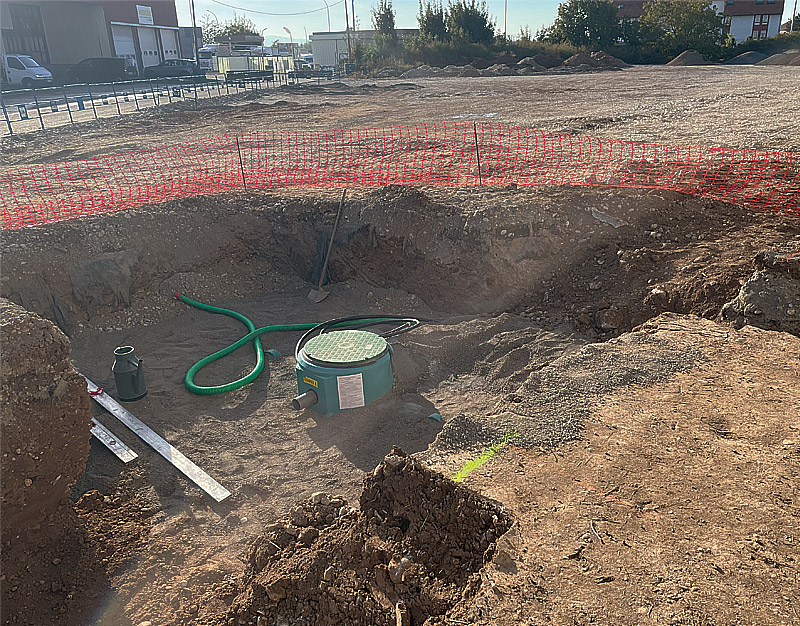
We have integrated a rainwater harvesting tank , which supplies the restrooms and our outdoor wash bay. We also filter wastewater before discharge to limit our environmental impact . The building's lighting has been entirely designed with smart LED fixtures that automatically switch off when no one is present, further reducing our energy consumption.
Installation of the rainwater recovery tank:
We have reorganized our industrial practices for greater responsibility
Sorting materials in specialized recycling centers (glass, wood, cardboard, ferrous metals), as well as the treatment of used oils, are also among the elements put in place to preserve our environment.
Regarding our manufacturing, our sourcing policy prioritizes short supply chains by using local subcontractors . They are required, and monitored, to use, for example, European steel for the manufacture of casings or gears. For spare parts, French and European suppliers are preferred.
Our approach doesn't stop there, because together with our clients, we implement sustainable solutions for their installations, whether for repairs or new gearboxes. For these, from the design stage, everything is done to minimize the environmental impact of the equipment in the long term.
MERGER's commitments at a glance:
-
Solar energy production : installation of photovoltaic panels to cover part of the site's needs.
-
Enhanced insulation and centralized temperature management to minimize energy consumption, both summer and winter.
-
Rainwater harvesting for toilets and the washing center.
-
Wastewater treatment , reduction of pollutant discharges.
-
100% LED lighting , intelligently controlled to avoid waste.
-
Selective sorting and recycling of waste in specialized centers (glass, metal, wood, cardboard, used oils).
- Local and responsible sourcing : short circuits are favored, with a selection of local subcontractors using European raw materials, particularly for casings and gears.
- Preference to French and European suppliers for mechanical components.
- Repairability and durability : MERGER designs reducers, multipliers and mechanical variators designed to last, be maintained and repaired.
- On-site expertise : we regularly intervene to recondition existing equipment, thus reducing the consumption of new resources.
An approach to preparing the markets of tomorrow
The gradual implementation of low-carbon public procurement , starting in 2026, reinforces the relevance of the MERGER approach. Our clients, both industrial and institutional, will benefit not only from robust technical solutions, but also from a partner aligned with their environmental obligations.
Our technical and sales teams are already working to promote this approach in our responses to consultations, to support operators, design offices and clients in building a more responsible industry.
Solar panels installed on the roof of the MERGER site in Corbas (69)
To go further: What is a “low carbon” public market?
From 2026, the French state plans to make mandatory integration of environmental criteria about public markets, as part of the National Low Carbon Strategy (SNBC).
This is in line with France's climate objectives: to achieve the carbon neutrality by 2050.
What are the main objectives of low-carbon public procurement?
- Reduce greenhouse gas (GHG) emissions over the entire life cycle of products and services purchased by the State, communities and public establishments.
- Promoting virtuous businesses on the environmental level: eco-design, carbon-free energy, local materials, recyclability, etc.
- Encourage industrial innovation to offer more sustainable solutions.
- Structuring local and responsible sectors.
What this means for companies like MERGER
The requirements:
-
Assessment of the carbon footprint of your products, services or construction projects.
-
Integration of sustainability criteria : lifespan, repairability, energy efficiency, use of recycled or recyclable materials.
-
Provision of evidence : FDES, LCA (Life Cycle Analysis), GHG assessments, ISO 14001 certifications, etc.
-
Sourcing justification : short supply chain, committed suppliers, traceability of materials.
The markets concerned:
-
Infrastructures published
-
Industrial or mechanical equipment (e.g. hydroelectric power plants, wastewater treatment plants)
-
Transport, energy, public buildings
-
All projects financed by national or European public funds
MERGER , thanks to its eco-designed building , its sustainable manufacturing approach , and its commitment to long-lasting and repairable solutions , is positioning itself to meet these new markets.
Our ability to refurbish, repair or remanufacture mechanical assemblies instead of replacing them is a strong advantage in a circular economy approach.
Would you like to learn more about our services for the hydroelectric sector? Contact our dedicated team via our contact form.
FAQ on the carbon neutrality objective
Legislative context and objectives
-
The Climate and Resilience Law (2021) and the Green Industry Law (2023): These laws are the cornerstones of this evolution in France. They aim to strengthen the integration of environmental considerations into public procurement. The objective is that by 2026, 100% of public contracts will include an environmental clause.
-
Carbon neutrality target for 2050: France, in line with the European Union's objectives, aims for carbon neutrality by 2050. This means that greenhouse gas (GHG) emissions must be reduced as much as possible, and that any remaining emissions must be offset by carbon sinks. Public procurement is a key lever for achieving this goal by directing orders towards more sustainable solutions.
-
National Plan for Sustainable Procurement (PNAD): The third PNAD (2022-2025) already sets ambitious objectives, notably that by 2025, 100% of public procurement contracts must integrate at least one environmental consideration.
2. What is changing concretely for public markets
From 2026 (and even before for certain aspects), several developments are to be anticipated:
-
Mandatory consideration of environmental criteria: Public buyers will have to integrate criteria for analyzing bids that take into account the environmental characteristics of the goods, services, or works. This will explicitly include requirements for combating greenhouse gas emissions.
-
Life cycle cost criterion: The life cycle cost criterion, which incorporates environmental externalities (including GHG emissions), is set to become an important, or even the sole, criterion for evaluating bids. This means that the total cost of a product or service over its entire lifespan, including its environmental impact, will be taken into account, and not just its initial purchase price.
-
Strengthening of SPASERs (Socially and Environmentally Responsible Public Procurement Promotion Schemes): Local authorities and public buyers subject to the obligation to adopt a SPASER will see these schemes strengthened and their publication facilitated.
-
Carbon Footprint and Assessment: The carbon footprint (or Greenhouse Gas Emissions Assessment – GHG Emissions Assessment) will become increasingly important. For companies with more than 250 employees, a carbon footprint assessment will be mandatory from 2025. Public procurement officers will be able to use it as a tool to identify responsible suppliers. There are even plans to introduce a single "carbon footprint" criterion in award procedures to favor bids with the lowest carbon footprint.
-
Bio-based and low-carbon materials: The Climate and Resilience Law provides for a strengthening of the obligation to use bio-based or low-carbon materials in at least 25% of major renovations and constructions under public procurement.
3. Impacts for businesses
This development represents both a challenge and an opportunity for businesses:
-
Strengthening competitiveness: Companies that have anticipated and implemented a decarbonization strategy will have an advantage. The ability to provide accurate GHG reports and evidence of environmental commitment will become a major asset for winning public contracts.
-
Innovation and optimization: This will encourage companies to innovate in their production processes, products, and services to reduce their carbon footprint. It also presents an opportunity to optimize energy expenditure management and resource use.
-
Reputation and credibility: Committing to a carbon neutrality approach and demonstrating it in responses to calls for tenders will strengthen the company's reputation and credibility with public actors and end customers.
-
Adapting offerings: Companies will need to revise their offerings to incorporate these new requirements. This may involve investments in greener technologies, more local supply chains, and improved environmental traceability.
-
Risk of non-compliance: Failure to comply with GHG emissions reporting obligations is already penalized, and fines have increased. It is therefore crucial to anticipate these changes to avoid penalties.